One-stop Solution for Wire and Cable
Email:info@qingzhou-cable.com
WhatsApp/WeChat/Skype/Phone:+8617335704553

WhatsApp/WeChat/Skype/Phone:+8617335704553
What is an AAAC Conductor? Features, Benefits, and Applications
AAAC (All Aluminum Alloy Conductor) is a high-strength, concentric-lay-stranded overhead electrical conductor made exclusively from a heat-treated Aluminum-Magnesium-Silicon alloy (typically Alloy 6201-T81). Designed primarily for overhead distribution and transmission lines, AAAC offers a superior strength-to-weight ratio and exceptional corrosion resistance compared to traditional conductors like AAC (All Aluminum Conductor) and ACSR (Aluminum Conductor Steel Reinforced).
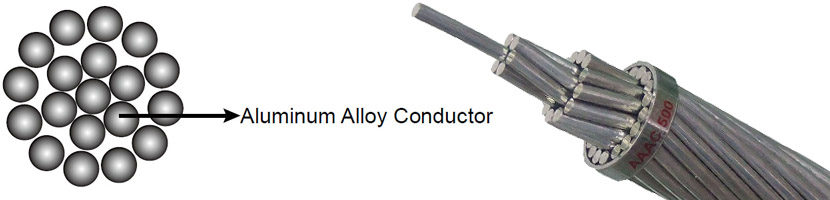
To assist electrical engineers and procurement managers, the table below outlines the core technical properties of AAAC conductors based on international standards (such as ASTM B399 and IEC 60104):
| Property | Specification / Value |
| Material Composition | Aluminum Alloy 6201-T81 (approx. 98.5% Al, 0.6-0.9% Mg, 0.5-0.9% Si) |
| Electrical Conductivity | 52.5% to 53% IACS (International Annealed Copper Standard) |
| Tensile Strength | Approx. 295–310 MPa (significantly higher than standard EC grade aluminum) |
| Standard Compliance | ASTM B399, IEC 60104, BS 3242, DIN 48201 |
| Operating Temperature | Continuous: 75°C to 90°C; Emergency: up to 150°C |
Electrical utilities globally are transitioning from ACSR to AAAC due to four distinct engineering advantages:
1. High Corrosion Resistance: Because it contains no steel core, AAAC is completely immune to galvanic corrosion. This makes it the ideal choice for coastal regions, industrial zones, and environments with high marine salinity or chemical exposure.
2. Reduced Power Losses (Lower $I^2R$ Losses): AAAC exhibits lower electrical resistance per kilometer compared to ACSR. Additionally, the absence of a magnetic steel core eliminates magnetic hysteresis losses, resulting in higher transmission efficiency.
3. Optimum Strength-to-Weight Ratio: The 6201-T81 alloy provides excellent tensile strength while remaining lightweight. This allows for longer spans between transmission towers and reduces sag under heavy wind and ice loads.
4. Cost-Effective Installation: Being lighter than ACSR, AAAC requires less structural support (lighter poles/towers) and reduces shipping, handling, and stringing costs during grid deployment.
Choosing the right overhead conductor depends on grid requirements. The following matrix simplifies the selection process:
AAC (All Aluminum Conductor): Highest conductivity (61% IACS) but lowest mechanical strength. Best suited for short spans in urban distribution networks where high sag is not an issue.
AAAC (All Aluminum Alloy Conductor): Balanced conductivity (53% IACS) with high mechanical strength. Ideal for medium-to-long spans in highly corrosive or coastal environments.
ACSR (Aluminum Conductor Steel Reinforced): Lowest conductivity due to the steel core, but highest mechanical strength. Best for extra-long spans (river crossings, rugged terrain) but prone to galvanic corrosion over time.
AAAC conductors are universally deployed in infrastructure projects requiring robust mechanical tension and high environmental endurance:
Primary and secondary overhead distribution lines.
High-voltage (HV) and extra-high-voltage (EHV) transmission grids.
Coastal, oceanic, and highly polluted industrial power networks.
Substation busbar connections.
Industry Note: When replacing ACSR with AAAC for grid upgrades, engineers can typically maintain the same electrical capacity while reducing structural load, effectively extending the lifespan of existing transmission towers.
For a more detailed price list of product models and specifications, please contact us using the information below.
*Describe Your Buying Requirements in Detail

